Competitive socialising is now easy for customers to understand as a category.
The problem is that many venues now describe themselves with the same ingredients: games, drinks, food, music and groups.
The next question is simple: why should someone choose your venue?
The games matter, but the occasion matters too
Different games attract different audiences, create different group dynamics and affect dwell time. They matter.
But the customer may still be choosing the venue because it solves a social problem: something everyone can join in with, somewhere lively enough for a birthday, a date that gives you something to do, or an office night out with less standing around.
The proposition needs to connect the games to the occasion people are actually buying.
Food and drink need to work with the games
If food and drink are important to the commercial model, they need to belong to the same experience.
That means service style, seating, ordering, pacing and atmosphere should support the way people play.
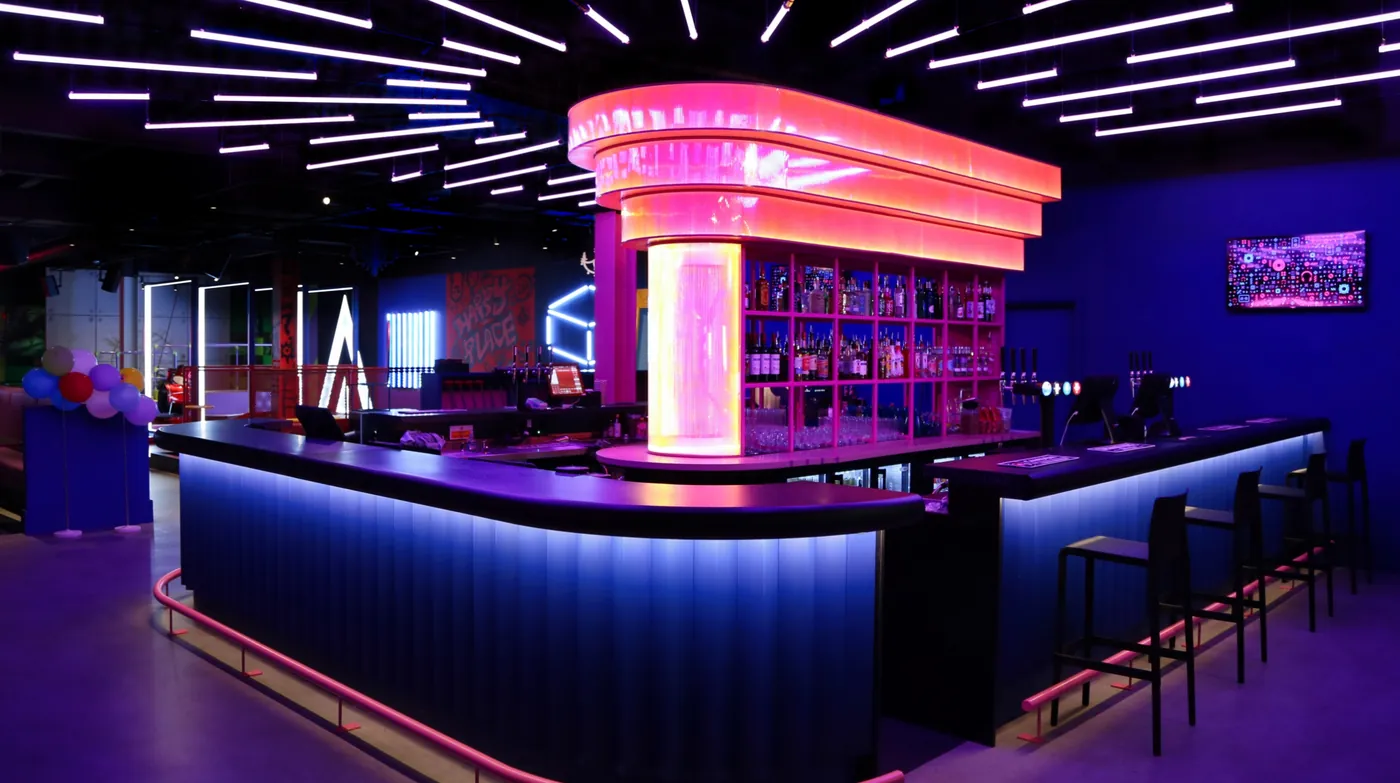
A beautiful bar that interrupts the game journey can still be bad experience design.

Design for the people who are waiting too
In most social games, not everyone is active every second.
Those gaps can be dead time or they can create theatre: watching, teasing, ordering another drink, noticing what is happening elsewhere in the venue.
Brand and spatial design should make those moments feel intentional.
Plan for repeat visits from the start
Novelty helps at launch, but it is not enough to drive repeat visits.
Repeat can come from mastery, social ritual, new modes, leagues, changing content, different occasions or simply a venue people enjoy spending time in.
The brand strategy should know which of those it is betting on. Otherwise 'come back' becomes a CRM message rather than a product truth.
Pop Playrooms: creating a brand around the whole venue
Our work on Pop Playrooms was about creating an environment where the activities felt like parts of one entertainment world.
That gave the brand something distinctive to own beyond the individual game formats and gave the physical design a central idea to amplify.